

Out of the Notebook
Why our best design ideas stay where they are, and what's beginning to change.

Fun Fact: The technology for video calls has existed since the 1960s, but wasn’t developed properly until the late 2000s, since there was not cultural demand for the technology.
Similar to the technology for creating video calls, the basics of improving the design of the short-form video interface to support learning and mental health are obvious:
Make sure the video isn’t full screen.
Make sure the user can control how their algorithm and feed are presented.
Build a complaints structure that requires accountability for collective decision-making.
Anyone who sits down for an afternoon to contemplate this arrives at the same design principles. The platforms aren’t implementing them because there aren’t sufficient financial incentives, and the culture doesn’t support true innovation. Social media platforms depend on endless engagement to pay the bills, so they prefer to play it safe and steal proven design patterns from each other — the story, the full screen video, the like, the comment — than come up with anything different, because different is risky.
The harder question is what kind of culture would have to exist for them to be considered desirable by anyone who could implement them. That culture is beginning to emerge, if you know where to look. This essay is about the opportunities that exist when you know where to look, and a reflection on the importance of cultural awareness as a designer.
Most designers want to create a better future. Almost every single one of us has a half-conceived sketch somewhere that would put the ethics and shallow engagement tactics used by social media platforms to shame. They rarely make it out of that notebook. Of course, capital is a huge part of this (difference is risky), but that is not the only factor. The cultural norms, social world, and political context that shape designs as they move from our notebooks into reality are complex webs most of us are unaware of.
Despite spending all of my adult life (and a good portion of my teenage years) dedicated to understanding these webs, I, too, struggle to point out where these opportunities exist. But, recently, I have been having some fascinating conversations behind the scenes with the lovely people at New_ Public and Elle Griffin . And I can see the culture that allows us to take these ideas out of our sketchbooks and into the real world beginning to coalesce.
knowledge influencing
The content genre that best typifies the opportunities and traps of short-form video is “knowledge influencing.” This describes a broad range of content — from cool-girl philosophy to productivity gurus — that claims to help you improve your life through education on their chosen topic.
What is often called “knowledge influencing” really means turning a teaching method based on mutual feedback into content that is measured by engagement, not understanding. For example, consider an influencer who posts short videos explaining complex topics, such as quantum physics or economics. They may receive thousands of likes or glowing comments, but they have no way to observe whether viewers genuinely understand the content or just appreciate the performance.
In contrast, a teacher in a classroom notices when students’ faces show confusion or when questions arise, and they can adjust and slow down to suit the learner’s needs. Knowledge influencers, like me, can’t do this because the platform prevents it. The content is designed to seem like teaching (with clarity, structure, confidence), but it loses what makes real teaching (focusing on the individual learner).
This is the pattern short-form video creates, stripped to its core. Engagement replaces understanding, and vague data allows creators to tell themselves whatever tale they need to keep going. But amid it lies an alternative.
Knowledge influencing, whilst typifying the worst of short-form video, can also show a way through it. What learning requires to be truly effective is relational reciprocity.
reciprocity + the private internet
In recent years, interaction on the private internet has increased exponentially. This is a topic I’ve already written about, but my perspective has begun to evolve.
The rise of the private internet has presented a unique problem for marketers, designers, and the creators who host private communities — if these communities are private, how can you tell what is working to build them? Creators are expected to run a Slack, Discord, or Substack Chat that functions as its own micro-platform, without any training on how to design one.
As a result of this rise, a number of my creator friends have asked me how I would “design” this private community to ensure healthy, honest engagement. This was something I didn’t know how to answer, since the private internet is essentially a black box from a design and human behaviour perspective. Much research on private online communities focuses on youth safety, platform comparisons, and similar goals.
The social structure of these communities — and therefore the incentives that create a positive community — is seriously under-researched. But when looking at the social behaviour of similar public forums, the problem of reciprocity arises.
“Reciprocity in Online Knowledge Sharing: A Conceptual Analysis” describes how reciprocity is a surprisingly controversial term in motivation scholarship, with debate over whether it is intrinsic or extrinsic. When you have a reciprocal relationship online, is this altruistic (to benefit others) or intrinsic (to eventually get the benefit back yourself)? Most theories focus on the benefactor (the person running the private community) as the origin of the reciprocal relationship, but this paper argues that the beneficiary should be the primary focus.
When the beneficiary (community members) receives the advice/essay/item from the creator, their emotional reaction is key. If they feel indebted, they feel obligated to “return the favour.” Sociological perspectives emphasise that asymmetrical social bonds are normal and can be prosocial if implemented correctly. The implementation relies on the beneficiary’s ability to express their obligation, adding back to the community, and creating the cycle of reciprocity.
The key part of this research is that disengagement occurs for two reasons:
Lack of feeling of obligation: the conversation/item/whatever is provided does not add enough value to generate obligation
Inability to “return the favour”: the relationship becomes too asymmetrical, and the obligation turns into guilt.
In the case of private online communities, this would mean shifting to understanding what the creator provides as a “benefactor.” Some questions I’ve been pondering around this are:
How might a private paid community allow (1) benefits that generate a feeling of indebtedness and (2) allow for expression of this through helping a third party or returning a “favour” so the indebtedness is prosocial, rather than extractive?
What kinds of obligations does a paid private community generate vs a public one?
What does “engagement” mean as a metric in a space designed to be unmarketable? This is key to understanding what the expression of obligation looks like and how it might contribute to the loop of reciprocity.
These questions, for me, point towards a knowledge influencer (and thus a cultural shift) that enables true learning and community. Instead of merely being viewers, watching the internet go by, people can truly feel as though they are participating, and this can inform the creators’ awareness of how well their audience understands their chosen topic. This doesn’t just apply to the private internet; the desire of creators and their audiences alike to build a positive community through a private community demonstrates a growing cultural need for reciprocity enabled by design.
value of contribution
New_Public’s After The Feed project explores similar questions, centering on what comes after the feed. Rising AI technology, they argue, mean that interfaces will become more and more personalised. Algorithmic feeds, as we know them, are on their way out. Because of doubts around AI technology, geniune human connection is becoming more and more valuable, as something that AI can’t replicate.
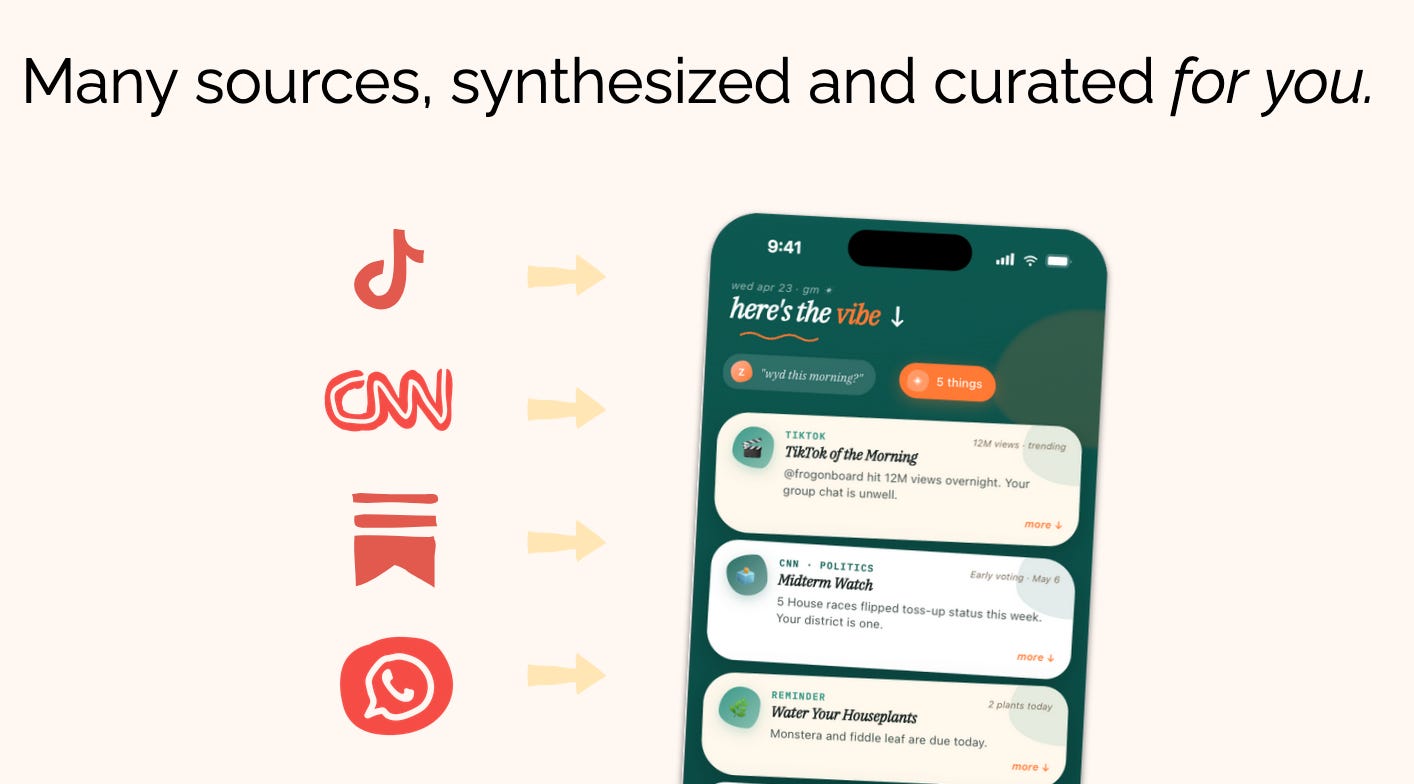
In answer to the question “What does “engagement” mean as a metric in a space designed to be unmarketable?,” they propose the answer is value of contribution. Trust in technology, institutions, the media, politics — it is all decreasing. In its decreasing, it is becoming more and more valuable. This is the trust economy.
Value of contribution measures what a person adds to a space, not how long they spend in it. Where engagement metrics ask did the user behave the way the platform needed, contribution metrics ask did the user give the space something it didn’t have before. A comment that helps someone think. A question that opens a thread. A piece of writing passed along because it was useful to a specific person, not because it was optimised. Contribution metrics are the platform-level answer to the reciprocity loop described above — they make it possible for the receiver to return the favour by recognising and rewarding the return. They favour the participation that costs the contributor something, and the participation that costs the contributor something is what builds trust.
So, designers. The feed is on its way out. We are beginning to step into a cultural moment where the requirement for the mad ideas we all have in our notebooks are growing. Geniune connection is in. Crack open that notebook, and tell everyone about your idea. I have plenty of them, including but not limited to:
Physical aging on posts that have been up for a while to contribute to temporal grounding
Configurations of profiles that go beyond “here is one person with some pictures of them” and allows more customisation, returning to something more like an enhanced personal website
Working with archivists responsible for translating physical archives into digital ones to explore how the parts of life that don’t fit into a database — the notes in the margins — can be put into the digital